
How to Organise a Successful Corporate Event in Lyon
Most articles on corporate event planning dish out generic advice. Book the venue in advance. Think about catering. Notify attendees. Thanks, we'd figured that much out.
What's missing is the real stuff: what actually happens between the moment someone says "we should organise a seminar" and the moment attendees leave with something in their heads that wasn't there before. The behind-the-scenes. The steps that make it work or make it fall apart.
Clarifying the Objective Before Talking About the Venue
This is the step almost everyone skips. People search for a venue, compare quotes, make a booking, and only ask themselves what the objective is once they're building the programme. That's usually where the problems start.
An event without a clear objective looks like something. Participants have a good day. They eat well. They go home. And three weeks later, they can't quite remember why they were there.
The first question to ask isn't "which venue?" it's "what do we want participants to think, feel, or do differently after this event?" The answer changes everything: the format, the programme, the choice of spaces, the tone of the presentations, the activities.
A seminar whose real objective is rebuilding connections after two years of remote working is not built like a strategic back-to-school seminar. A corporate evening that needs to celebrate a record year is not programmed like a team cohesion event for people who don't yet know each other. The venue can be the same. The programme cannot.
Setting the Logistical Framework
Once the objective is clear, the logistical constraints fall naturally into place.
- The date. Key speakers' diaries, holiday periods, major business calendar moments, and venue availability all need to be cross-referenced. For a sizeable event, six months' lead time is a comfortable minimum. Booking too late means settling for the dates nobody else wanted.
- The headcount. The number of participants determines everything, the choice of spaces, the catering format, the technical setup, the overall budget. And the realistic headcount, not the optimistic one. If you invite 200 people and historically 20% decline, plan for 160.
- The budget. It must be set before searching for a venue, not after. A budget defined upfront frames the decisions and prevents falling for a venue that won't fit the envelope. It covers the venue, catering, technical production, entertainment, decoration, access logistics and always a 10% margin for the unexpected.
- Specific constraints. Accessibility for guests with reduced mobility, dietary requirements, attendees travelling from afar, specific technical needs, these parameters need to be gathered upfront, so you don't build a proposal that collapses at the first practical question.
Choosing the Venue for the Right Reasons
The venue isn't a backdrop. It's a tool.
A good corporate event venue in Lyon meets three requirements simultaneously: it suits the format and the headcount, it's easily accessible for the majority of attendees, and it says something about the event before the programme has even started.
That last point is underestimated. Participants form an impression of the venue the moment they receive the invitation and that impression colours their openness on the day itself. A memorable, history-rich venue creates a positive anticipation that prepares minds to receive what you have to give them. A generic venue creates a neutral expectation.
Lyon offers a genuine diversity of event venues, from modern spaces to heritage sites, from urban locations to natural settings. But few combine high capacity, modular spaces, a dedicated on-site team, and the strong identity that turns an ordinary event into a memorable experience.
During a visit, the questions to ask go beyond capacity and price: the real usable surface area, the on-site team and their level of involvement, flexibility on installation times, partner suppliers, the contingency plan in case of bad weather. Those are the questions that separate good venues from those that simply rent out space.
Building the Programme Hour by Hour
An event programme isn't a list of sequences. It's a narrative. Each moment must prepare the next, every transition must be thought through, and the overall rhythm must alternate between high-intensity phases and breathing space.
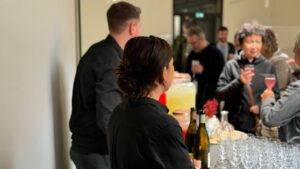
Arrival. In theory it lasts fifteen minutes. In practice, it's often the first experience participants have of the venue and the organisation. A well-managed arrival, clear signage, an identifiable team, a first drink served easily, immediately sets the tone.
Opening plenary. If there is one, it should be short and dense. Participants are fresh, their attention is at its peak, this is the moment for your most important messages, not for burying them in context slides. Twenty punchy minutes are worth more than a full hour.
Working sessions. Human attention tires quickly. Blocks of 45 to 60 minutes maximum, with active breaks, maintain a level of engagement far superior to an uninterrupted half-day.
Entertainment & activities. A well-chosen activity accelerates cohesion, opens up conversation, and creates shared memories. A poorly chosen one consumes time and energy without producing anything. It must serve the event's objective, not just fill time.
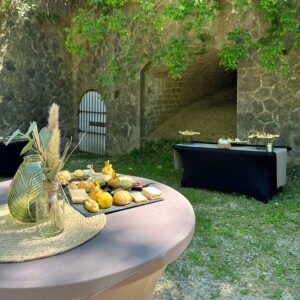
Meals. Lunch is not a pause in the event. It's a sequence in its own right, often the one where the most useful conversations happen, the ones that never take place in a meeting room. The table layout, the service format, and the allocated duration all shape the quality of informal exchanges.
The close. Too often rushed. It's the last message participants take away, and the most recent memory. It deserves as much preparation as the opening.
Coordinating Suppliers
A corporate event mobilises on average four to eight suppliers: venue, caterer, technical crew, entertainment, decoration, security, transport, and sometimes accommodation. Each has its own constraints, timetables, and contacts.
The right approach: one single reference document, shared with everyone, that summarises timetables, access routes, contacts, the floor plan, and programme sequences. No scattered emails, one document that everyone consults and that is updated in real time.
When the venue has a dedicated project manager who takes charge of this coordination, a considerable burden lifts from the client organiser's shoulders. It also significantly reduces the risk of miscommunication between suppliers.
Preparing for the Day as if Something Will Go Wrong
That might sound pessimistic. It's realism.
On any event, something always unfolds differently from what was planned. A late speaker, temperamental equipment, a delayed delivery, the weather changing its mind. It's not a question of bad luck, it's the nature of live events.
The difference between a successful event and a chaotic one doesn't lie in the absence of unexpected situations. It lies in the ability to absorb them without participants noticing.
In practice: a documented plan B for every critical sequence, time margins built into the programme, an emergency contact for every supplier, an on-site team sized adequately for the event. For events with outdoor phases, the weather contingency scenario is prepared to the same level of detail as the main programme.
The Debrief, the Part Everyone Forgets
The event is over, participants have left, teams are packing up. That's usually where the organisation stops.
That's a mistake. The post-event debrief is one of the most valuable resources for the next edition and most organisers neglect it.
A good debrief covers three things: what worked well and why; what could have been better and how; and what participants took away to measure whether the initial objective was met. Immediate feedback, gathered on the day or the day after, is far more reliable than surveys sent a week later.
GEM Venues in Lyon to Put All of This into Practice
Applying these steps takes experience. The kind that accumulates across hundreds of events, in different formats, with different constraints, in venues that each have their own logic.
That is what the Groupe Event Management has been building for years through its collection of Lyon heritage venues, four sites with a dedicated team, seasoned partner suppliers, and an operational track record that few players in the region can claim.
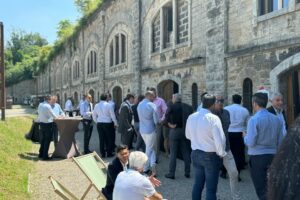
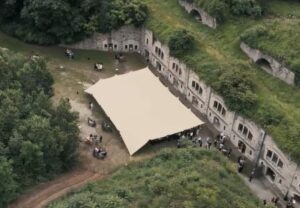
Fort de Feyzin, 15 minutes south of Lyon: a 19th-century fort surrounded by 26 hectares of forest classified as a Site of Natural Sensitivityby the Auvergne-Rhône-Alpes Region, owned by the Town of Feyzin. Up to 1,000 guests in cocktail format in the Cour du Cavalier (2,000 m²), modular spaces for every format, 120 free on-site parking spaces. The ideal venue for large events and full-day programmes with outdoor phases. The site's history is documented at lefortdefeyzin.fr.
Fort de Vaise, in central Lyon (9th arrondissement): another fort from the Séré de Rivières belt, for seminars, corporate evenings, and team building in a heritage setting accessible by public transport from the city centre.
L’IAC — Institut d’Art Contemporain, in Villeurbanne: a strong cultural setting for product launches, conferences, and events that call for a creative and artistic backdrop.
Studio 33, Art Deco at Quai Arloing (Lyon 9th): for events that call for a more intimate atmosphere and a refined urban setting.
Four different venues, one shared logic: spaces with a strong identity, a team that masters the organisation from start to finish, and the conviction that a well-organised event leaves something lasting with those who attend.
Fort de Feyzin and Fort de Vaise are listed by Only Lyon Pro and Visiter Lyon among the reference event venues of the greater Lyon area.
Planning an event and wondering which GEM venue best suits your project? Contact Fort de Feyzin, Fort de Vaise, IAC or Studio 33, we always start by understanding the objective.